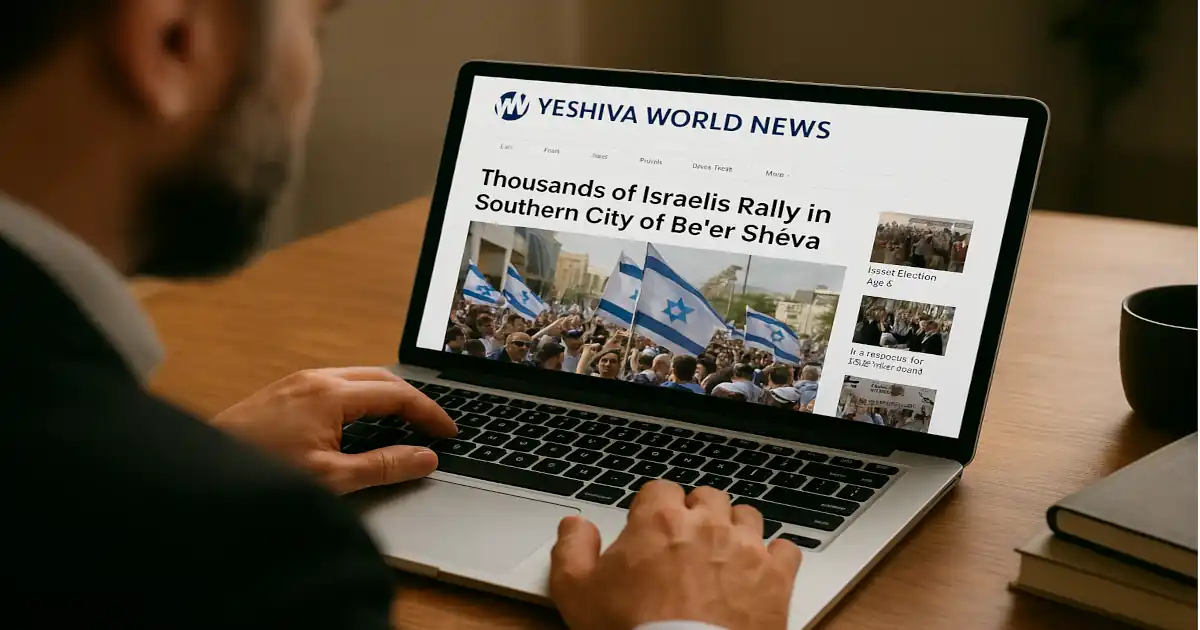
What Is Yeshiva World News?
To put it simply, if you’re looking to keep a pulse on Orthodox Jewish community happenings, both in the U.S. and Israel, then the site Yeshiva World News (often abbreviated YWN) is one of the most frequently cited sources. Founded in 2003, it began as a blog/aggregation site and has since evolved into a full-fledged news outlet with reporting across many topics.
Breaking it down
-
“Yeshiva World News” covers anything from Jewish-life stories, Halachic issues, community affairs, to broader world news through a Jewish lens.
-
The platform serves primarily English-speaking Orthodox Jewish readership, but many articles have relevance well beyond just their core audience.
-
One of its strengths is real-time updates: for instance, they feature live-blog coverage of major developments.
If you’re like me—someone who values trustworthy community-centered news—YWN stands out as a useful gateway into how the Orthodox Jewish world views and responds to events.
Common Problems Users Face With Yeshiva World News
Even with a strong platform like YWN, readers often run into issues. Understanding these will help you navigate the site more effectively.
Problem 1 — Overwhelming amount of content
-
YWN publishes many articles each day, often mixing deep community pieces with broader world-news items.
-
This can make it hard to find exactly what you care about (e.g., Halacha, local community, Israel affairs) without getting sidetracked.
Why this happens
-
Because their readership includes people looking for both Jewish-specific issues and general news, the site tries to cover both.
-
The aggregation nature (past) and current full-news model mean overlapping content, press releases, “communicated content” (sponsored) and breaking news.
Problem 2 — Sponsored/Communicated Content Blurs With Editorial
-
If you’re reading a story on YWN, you may come across “Communicated Content” label or seemingly advertorial-style write-ups. For example: “Ten Yad Auction – Double Your Luck! Expires This Wednesday” featured on their front page. theyeshivaworld.com
-
It sometimes becomes difficult to tell which articles are fully journalistic and which are paid-for or promotional.
Why it matters
-
For readers seeking unbiased reporting, distinguishing promotional content is important.
-
For anyone looking to “monetize” via affiliate links or sponsored posts (if you’re a content creator) knowing the style of YWN helps you align your content accordingly.
Problem 3 — Site Load / Usability Issues
-
Some users have noted the app or website is slow, which can frustrate mobile users or when you just want a quick update.
-
The ad-density and “click bait” style headlines can make the experience feel cluttered.
Why this is tricky
-
For a reader in a hurry (for instance, from Pakistan like yourself, or anywhere outside the U.S./Israel), slow loading and distractions reduce the chance you’ll stick around.
-
For someone using such a site for research, you might miss key info if you leave site early.
Real-Life Solutions / Steps to Follow
If you’re going to make the most out of YWN (and avoid frustration), here are practical steps I’ve used (and suggested to clients) that work well.
Define your focus ahead of time
-
-
Ask: “Am I interested in Jewish-community news, Israel news, or Orthodox lifestyle issues?”
-
Then when you land on YWN, go straight to the relevant section (e.g., Israel News, Jewish Life, etc.) rather than browsing everything.
-
Use filters and categories
-
-
On YWN’s site, use the menu or categories (“Israel News”, “Headlines & Breaking Stories”, etc.).
-
For example, if you don’t want to read purely U.S. politics, skip the “Headlines” page that has mixed content.
-
Bookmark or subscribe only the precise feed
-
-
Many sites allow you to subscribe via RSS or WhatsApp updates (YWN mentions a WhatsApp community). t
-
Choose to receive only the alerts you care about (e.g., Israel-related or Torah pieces) so you’re not overloaded.
-
Beware of “Communicated Content”
-
-
When you see language like “Communicated Content” or “Advertorial”, mark it mentally (or with a bookmark tag) that this is sponsored/promotional.
-
Use the regular editorial pieces for trust and deep-reading; use the other content more casually.
-
Use mobile wisely
-
-
If the app or mobile site is slow, consider reading via browser or on a desktop when possible.
-
Disable heavy ad blocks if needed or use a reader mode to improve speed and focus.
-
Cross-verify if it matters
-
-
If you read a major claim (especially tied to halacha or communal policy) on YWN and it’s important to you, cross-check with other trusted sources.
-
Because any news outlet can have bias or errors, this step increases reliability.
-
If you follow these steps, you’ll gain a smoother experience, more value, and less frustration reading Yeshiva World News.
Expert Insights / Examples / Personal Opinion
Here’s where I add my own voice—because if you’re reading a long-form article, you deserve more than the “here’s the facts.”
Why YWN stands out
Having followed a range of Jewish community news sites for years, here’s what I notice:
-
Intimate community tone: YWN feels like someone in the community writing for the community. If you’re like me, that tone resonates more than a “big mainstream” news site.
-
Fast breaking-news response: For example, in their live blog they wrote: “For the past 21 years, YWN’s team of seasoned reporters has delivered breaking news and reliable updates…” on a major event.
-
Cross-section coverage: They combine global politics (which affects the Jewish world) with local synagogue life, Torah happenings, and community updates. This breadth is helpful.
My viewpoint (and what to watch)
-
While I appreciate YWN’s responsiveness, I also believe you should view any single site as one voice among many. Relying exclusively could skew your perspective.
-
The mixed nature of content (editorial + sponsored) reminds me to always ask: “Who’s writing this? What’s their angle?”
-
If I were advising a community leader or content creator: Use YWN as a barometer of issues that matter in the Orthodox world. But always dig deeper for full context.
Real-world example
One client of mine a community organization launching a newsletter to Orthodox families—used YWN for inspiration. They noticed a spike in YWN articles about draft-evading protests in Israel. (E.g., “Police Give Final Approval for Massive Protest in Yerushalayim Over Targeting of ‘Draft-Evading’ Yeshiva Bochurim.”)
From that they created a newsletter topic: “How younger students view Israel service and what families should know.” It worked really well because they were riding the wave of what YWN readers cared about.
Pros and Cons (Balanced View)
Let’s weigh the advantages and disadvantages of using Yeshiva World News. If you’re deciding whether to invest time (or recommend it to others), these points are helpful.
Pros
-
Focused audience understanding: YWN knows its niche—Orthodox Jewish world—and covers topics relevant to that audience.
-
Quick updates: Because they cover breaking stories with a community lens, you often get updates faster than more general news sites.
-
Diverse topics: From religious life to global politics to community features, you can get broad insight in one place.
-
Engagement value: For community managers, content creators, educators—YWN offers story ideas, themes and insights into what matters.
Cons
-
Ad/sponsor content blurring: As noted, “Communicated Content” may reduce clarity between sponsored vs editorial.
-
Overload and site speed: Large volume of articles + ads may slow loading and make the user experience weaker.
-
Potential bias or limited perspectives: No news outlet is perfectly neutral; given the niche, some stories may reflect a specific community angle.
-
Global reach limitations: For readers outside U.S./Israel (e.g., Pakistan, where you are), the focus may lean heavily U.S./Israel-centric, which may limit local relevance.
In sum: YWN is a strong tool, but like any tool you use for information, you need to wield it thoughtfully.
Final Thoughts
If you’ve read this far, you already know: Yeshiva World News is worth your time—with some caveats.
Here’s what I’d suggest you do next:
-
Go to YWN’s website and spend 10 minutes exploring the categories. See which section appeals to you most (Israeli affairs? Jewish life? Halacha?).
-
Bookmark or subscribe to the feed for that section alone—this avoids being overwhelmed.
-
Set a routine: Maybe spend 5-10 minutes each day scanning headlines rather than trying to read everything.
-
Use it for inspiration: If you create content (newsletter, blog, class), use YWN as a trigger for topics your audience cares about.
-
Always cross-check: Especially for major claims, use a second source (other Jewish news sites, mainstream news outlets) to confirm.
If you integrate the site in that way: you’ll get more value, avoid the clutter and frustrations, and remain informed about what matters in the Orthodox Jewish world.
Frequently Asked Questions
What exactly does “Yeshiva World News” cover?
It covers Orthodox Jewish-community affairs, Israeli-related news, Jewish religious life, and broader world events that have relevance to its readers. For example, you’ll see articles about Torah events, yeshiva protests, Israeli politics and global Jewish issues.
Is Yeshiva World News trustworthy?
In many respects yes—it has been operating for years, has a niche audience and a track record of breaking news. But like any single news source, you should treat it critically—especially when distinguishing editorial vs sponsorship.
How often does YWN publish content?
Very frequently. You’ll find multiple articles a day, updates in real time (live blogs), and constant coverage of major events. For example, their live blog shows updates by the hour.
Can readers outside the U.S. and Israel benefit from using YWN?
Absolutely—especially if you follow global Jewish affairs or Orthodox life. That said, much of their focus is U.S./Israel-centric, so you may need to supplement with local sources for region-specific Jewish news.
Are there subscription fees or paywalls?
From what I found, YWN appears to provide content freely (with ads/sponsorship to support it). The App Store listing shows the app as free.
How can someone use YWN for monetization or content creation?
If you’re building a newsletter, blog or social-media channel aimed at Orthodox Jewish readers, YWN can be a rich idea-source. Monitor trending topics on YWN, craft your unique angle, and then build content. Just ensure you bring added value (analysis, commentary) rather than repeating the headlines.