What Is Mapping in School?
Ever wonder why a road map helps you find your way without getting lost? Mapping in education works the same way. It’s a visual tool where you draw ideas connected by lines, like a spider web of smarts.
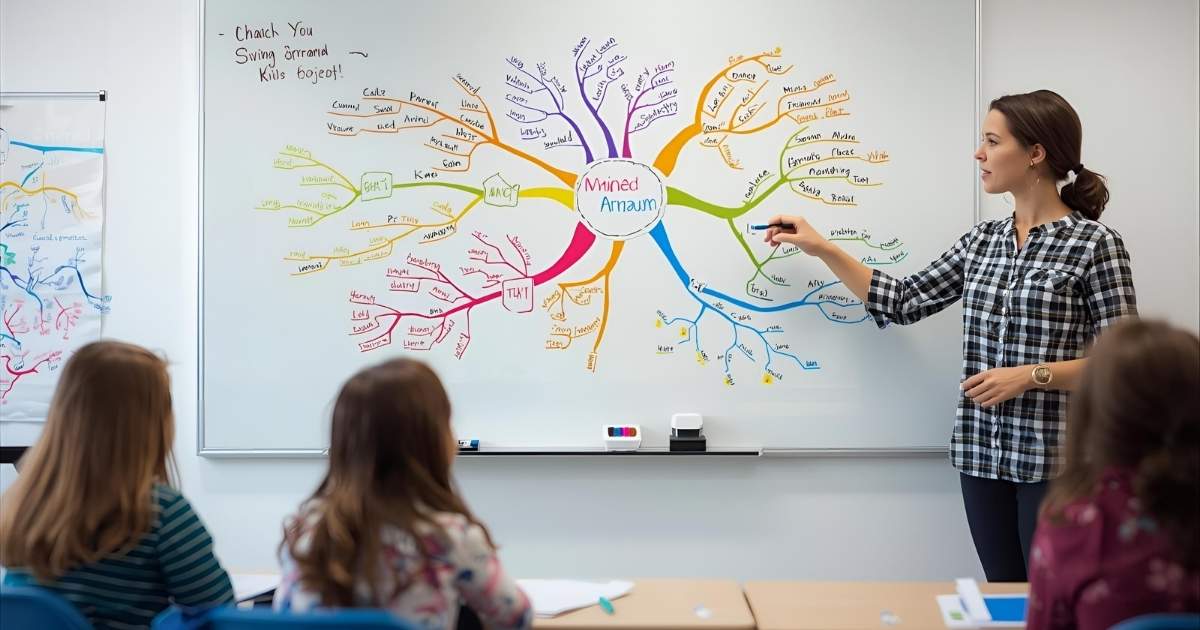
Think of mind maps and concept maps as your best buddies here. A mind map starts with one big idea in the center, then branches out like tree limbs with related thoughts. Colors and doodles make it pop. Concept maps are like family trees for facts they use boxes and arrows to show how things link, like “rain causes clouds” in science.
I remember my niece, little Emma, tackling her first water cycle lesson. She drew a sunny circle in the middle for “water,” then arrows to evaporation and rain. Suddenly, the whole cycle made sense. No more blank stares at the textbook. This isn’t just kid stuff; experts like Tony Buzan, who dreamed up mind mapping back in 1974, say it lights up both sides of your brain. Ready to try? Grab a crayon and see.
Why Mapping Helps Kids Learn
Okay, let’s get real school can feel like climbing a hill with slippery shoes sometimes. That’s where mapping steps in as your sturdy rope. It boosts memory because pictures stick better than plain words. Did you know 65% of us learn best by seeing things? Maps let you link new info to what you already know, like tying a knot that won’t come loose.
But it’s not all about cramming facts. Mapping sparks creativity, especially for kids who clam up in class. Imagine a shy boy drawing wild branches for a story idea boom, he’s chatting away. Studies show it cuts study time by 10% too, leaving room for recess. The tricky bit? It takes a few tries to get comfy. Don’t sweat it; that’s normal.
Here’s a quick hack: Color-code your branches red for math problems, green for history dates. It turns review time into a rainbow hunt. Teachers love it because they spot confusion fast, like a weak branch ready to snap.
Easy Steps to Make a Map
Alright, let’s roll up our sleeves and build one together. It’s easier than tying your shoes. First, pick your paper or screen and plop the main idea smack in the middle. Write it big and bold.
Next, draw wiggly lines out to sidekicks smaller ideas that help the big one. Add pictures or words on each branch. For homework on animals, center “lion,” then branch to “eats meat” with a steak doodle. Number three: Step back and connect the dots with arrows if needed. Done in ten minutes!
Compare this to old-school lists: They’re straight lines, like marching soldiers useful but snoozy. Maps? They’re a playground, twisting and turning for fun discoveries. In one school study, kids using maps scored 20% higher on tests because they saw the whole picture.
Pro tip: Start with pencil so you can erase oopsies. Share it with a pal for fresh eyes. Before you know it, mapping becomes your secret weapon.
Top Tools for Mapping Fun
Who says learning can’t be app-tastic? Free tools make mapping a breeze on your tablet or phone. No fancy gear needed just tap and go.
Kick off with Bubbl.us. It’s online, super simple, and bubbles up your ideas like soap fun. Perfect for quick class notes. Then there’s EdrawMind, loaded with color templates that scream “homework helper.” Drag, drop, and watch it sparkle.
Don’t sleep on Canva it’s like stickers for your brain. Add fun icons to make a history map pop. Joseph Novak, the concept map whiz from the 1970s, would nod at how these show thinking gaps early. With 2025 trends leaning into AI smarts, some apps even suggest branches now.
- Bubbl.us: Free for basics, great for teams.
- EdrawMind: Templates galore, export easy.
- Canva: Doodle heaven, share with one click.
Pick one and play. Your next project will thank you.
Mapping for Careers and Life
School’s not just ABCs it’s a launchpad for big dreams. Mapping shines here, sketching paths from classroom to cool jobs. Draw your center as “future me,” then branch to skills like “team player” or “code whiz.”
Kids often skip soft stuff like chatting or fixing fights; maps fix that by linking it all. Picture a girl mapping “vet path”: School biology leads to animal care, with arrows to volunteer days. It makes goals feel close, not far-off fog.
A neat fact: Maps help spot weak spots, like missing math for engineering dreams. Group it with family over pizza watch ideas flow. Stats say visual tools like these build retention by linking life bits, cutting confusion by heaps. Tie this to our smart learning tips for more wins.
Real Stories of Mapping Wins
Stories beat lectures any day let’s hear from real folks. Take Sarah, a nursing student buried in body systems. She mapped heart to lungs with arrows for blood flow. Exam day? She aced it, saying, “It was like following a friend’s directions.”
In a far-off school, teachers used maps like UNICEF’s satellite sketches to plan fair lessons for remote kids. Scores jumped because everyone saw the plan clear. Or consider Alex, a dyslexic boy who hated reading. Drawing maps with pics turned words into adventures his grades soared, per British Dyslexia folks.
These aren’t flukes. A group study had teams map cases, boosting critical thinking big time. Your turn: Map a win and share on our forums.
Fix Common Mapping Hiccups
Nobody’s perfect maps can start messy too. “Too chaotic?” Switch to digital for tidy drags. “No time?” Do a five-minute sketch daily; it snowballs.
Teachers trip on training, but studies say start small in one class. Paper’s cheap and hands-on, like feeling clay. Apps? They share zips and zoom easy. Weekly check-ins fix wobbles ask, “What’s fuzzy here?”
- Messy starts: Use lines, not scribbles.
- Time crunch: Timer for ten-minute bursts.
- Group grumps: Rotate leaders for fair fun.
One fix flips frustration to flow. You’ve got this.
FAQs mappingeducation com
What is mind mapping in education?
Mind mapping draws ideas from a center topic with branches and colors. It helps kids see big pictures fast. Great for notes or plans. Teachers use it to connect lessons, making hard stuff like math feel simple. Kids love the drawings it turns study time into art class. Try it for homework; you’ll remember more without trying hard.
How does mapping improve student learning?
It links ideas visually, boosting memory by 15%. Kids grasp tough topics like science cycles easier. Fun colors keep them engaged. Studies show critical thinking grows too, helping solve real problems. No more forgetting maps make facts stick like glue. Parents see happier homework vibes.
What are free mapping tools for teachers?
Try Bubbl.us for quick online maps or Canva for pretty designs. Both let teams edit together. No cost for basics. MindMup syncs with Google, perfect for class shares. These tools save prep time and spark student chats. Download one today for your next lesson plan
Can mapping help with exam prep?
Yes! Maps summarize chapters in one view. Review branches to recall facts quick. Students score higher with practice. It fights cram panic by showing links, like history events chained. Add colors for fun turn review into a game. Your grades will thank you.
What’s the difference between mind and concept maps?
Mind maps branch free like a tree for brainstorming. Concept maps use arrows for “how/why” links, like cause-effect. Both aid thinking. Minds are wild and colorful for ideas; concepts are neat for facts. Pick minds for stories, concepts for science. Mix them for super smarts.
How to start mapping in class?
Pick one topic, draw center on board. Add student ideas as branches. Takes 10 mins; builds team smarts. Watch kids light up as connections click. No fancy stuff just markers and fun. It turns quiet classes into idea parties. Give it a go tomorrow.